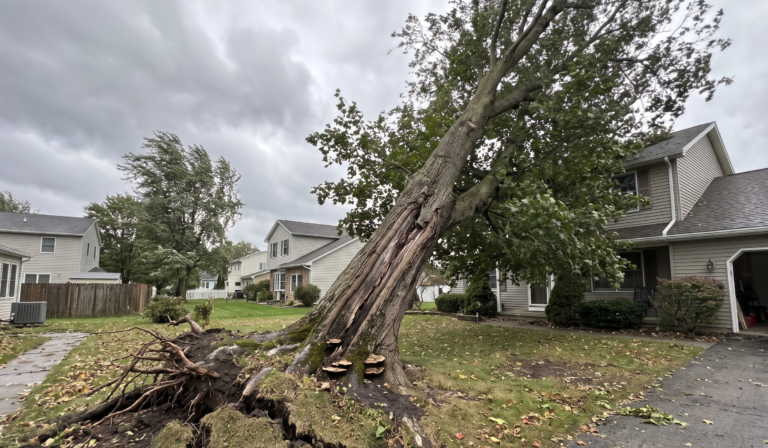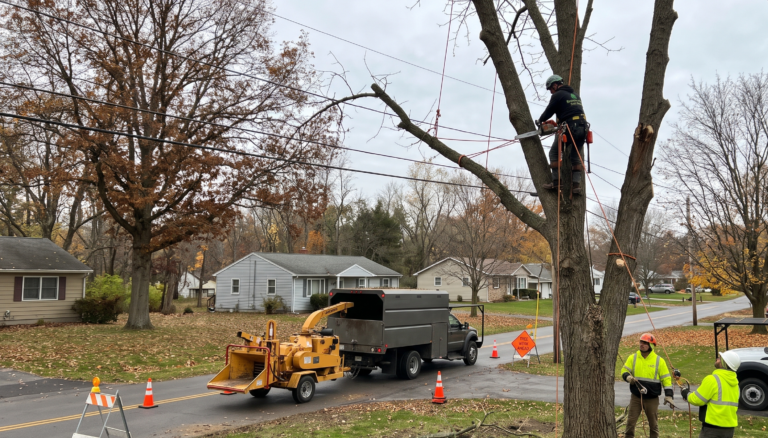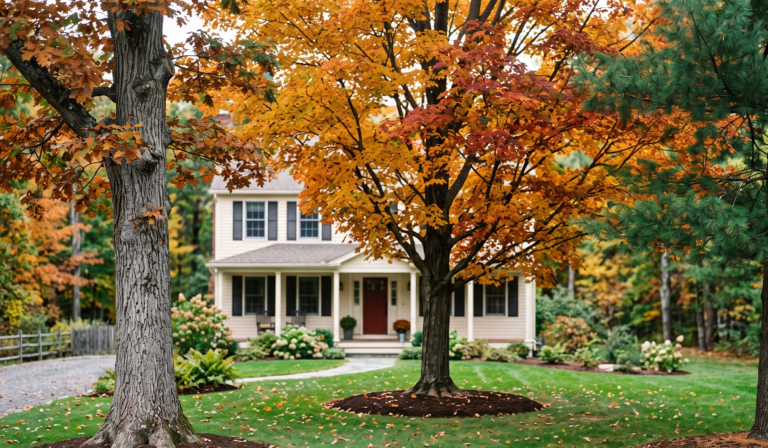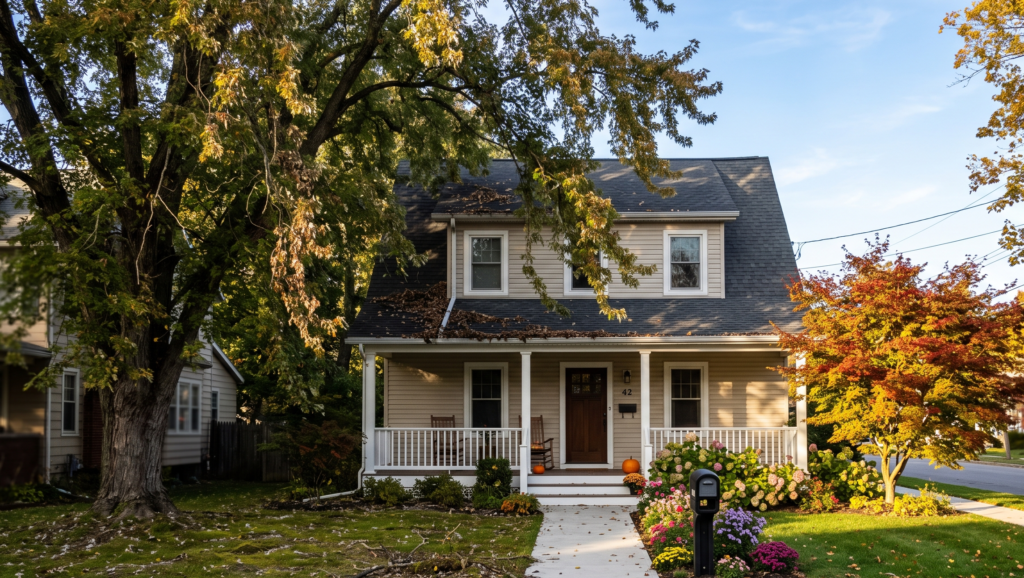
When prospective home buyers cruise down West Avenue or turn into one of the quiet residential subdivisions off North Greece Road, their initial impression forms within roughly seven to ten seconds. That quick glance takes in the roofline, the siding, the driveway, and, most prominently, the living landscape framing the home. For homeowners in Hilton, NY, mature trees are often a source of community pride, offering cool summer shade, windbreak protection off Lake Ontario, and unmatched autumn color. However, when regular tree trimming and canopy management fall by the wayside, those majestic assets quietly turn into liabilities. Overgrown trees can cast heavy shadows over your siding, obscure architectural character, threaten roof shingles, and ultimately drag down both your curb appeal and overall property value.
Investing in proactive tree care is not merely an aesthetic choice; it is a direct preservation of your home equity in the Monroe County real estate market. In this in-depth guide, we explore how unmanaged tree growth diminishes property valuation, examine the localized risks presented by Upstate New York weather patterns, analyze the financial returns of professional arboriculture, and detail practical steps to restore balance to your landscape.
Frequently Asked Questions
Q: How quickly do prospective buyers judge a property’s exterior in Hilton?
A: Real estate studies show curb appeal impressions solidify within 7 to 10 seconds. In suburban and village neighborhoods like Hilton, unkempt trees immediately signal potential exterior neglect.
Q: Why are mature trees both an asset and a liability for Hilton homeowners?
A: While mature trees offer windbreak benefits and desirable summer shade, untamed growth encroaches on power lines, rooflines, and underground utilities, turning an attractive landscape into an expensive maintenance liability.
The Psychology of First Impressions: Curb Appeal in the Hilton Housing Market
Curb appeal is not an abstract design buzzword; it is a measurable economic driver. Real estate industry analyses consistently demonstrate that homes with cohesive, well-maintained landscaping sell for 5% to 12% more than comparable properties with neglected yards. Conversely, unmanaged exterior growth triggers immediate subconscious hesitation in prospective buyers.
The “Foreclosure” Aesthetic
When branches droop below gutter level, crowd front windows, and obscure the main entryway, a home immediately feels closed-off, neglected, and dark. Buyers frequently associate unchecked exterior growth with deferred interior maintenance. The unspoken logic is simple: if the owner neglected a visibly sprawling silver maple over the garage for eight years, what condition is the HVAC unit, plumbing, or crawlspace in?
Visual Clutter vs. Intentional Framing
In architecture and professional landscape design, trees are meant to act as an intentional picture frame. A healthy, properly pruned tree draws the eye toward the front door, highlights dormers and porch features, and complements the lawn. Overgrown canopies do the exact opposite. Thick, tangled limb structures create visual “noise” that flattens architectural depth, making a charming colonial or ranch home look cramped, dated, and uninviting from the street.
Frequently Asked Questions
Q: Can overgrown landscaping genuinely lower initial offers on a home?
A: Yes. Visual clutter causes buyers to assume deferred maintenance indoors, often prompting them to subtract estimated repair and clearing costs directly from their opening offers.
Q: What is the goal of “architectural framing” in tree trimming?
A: Pruning should elevate the canopy and clear sightlines so that front entryways, windows, and roof peaks remain visible from the street, accentuating the property’s design rather than burying it.
5 Direct Ways Overgrown Trees Degrade Property Value
While loss of aesthetic appeal slows down showing activity, physical damage and inspection red flags directly shrink the numbers on closing disclosures. In Hilton and surrounding Monroe County neighborhoods, home inspectors scrutinize overgrown trees for several specific points of failure:
1. Roof and Gutter Encroachment
When branches hang directly over a roofline, they cause continuous mechanical friction. High winds off Lake Ontario push heavy limbs back and forth against asphalt shingles, stripping away protective granules, loosening seams, and eventually puncturing the roof decking.
- Organic Debris Accumulation: Overhanging canopies drop an uninterrupted blanket of twigs, leaves, seedpods, and moss onto shingles. This layer traps moisture against the roof surface, drastically accelerating rot and cutting shingle lifespan in half.
- Gutter Failure: Overflowing organic muck clogs downspouts, causing rainwater to back up underneath the fascia board and seep into attic rafters and interior ceilings.
2. Siding Deterioration, Mold, and Mildew
Dense, overgrown tree canopies create perpetual microclimates of shade and humidity around a home’s exterior. In Upstate New York, homes surrounded by untamed trees often display significant streaks of green algae, black mildew, and wood decay on vinyl or cedar siding. Without daily sunlight exposure to dry out morning dew and rain, siding materials degrade prematurely, creating an unsightly exterior that requires aggressive chemical power washing or costly replacement.
3. Foundation and Hardscape Disruption
A tree’s underground root structure often spreads two to three times wider than the diameter of its above-ground canopy. When rapid-growing shade trees—such as willows, silver maples, or poplars—are planted too close to a foundation, their expanding lateral roots seek out subterranean moisture:
- Foundation Wall Fractures: Expansive roots apply persistent hydrostatic pressure against poured concrete or cinder-block foundation walls, causing hairline cracks that welcome basement water seepage.
- Buckled Driveways and Walkways: Shallow, overgrown root flare lifts asphalt and concrete slabs, creating hazardous tripping conditions that home inspectors flag as immediate safety violations that must be repaired before mortgage approval.
4. Underground Utility and Sewer Line Infiltration
Older village residences in Hilton frequently feature mature sewer and drainage laterals. Invasive root systems find their way into microscopic joints and cracks in clay or iron pipes. Once inside, roots feed on the nutrient-rich water flow, expanding into thick root balls that completely block household plumbing and cause catastrophic sewer backups into basements.
5. Increased Liability and Hazard Insurance Complications
Insurance underwriting algorithms have become increasingly stringent. Insurance adjusters and underwriters frequently inspect properties via high-resolution satellite imagery and drive-by assessments. If a massive, decaying, or overextended limb hangs directly above a roofline, the insurance provider may issue an ultimatum: trim or remove the hazard within 30 to 60 days, or face policy cancellation or rate spikes. Prospective buyers facing mandatory tree remediation costs before their policy can bind will almost always lower their offer to compensate.
Frequently Asked Questions
Q: Do home inspectors flag branches that contact the roof?
A: Yes. Overhanging branches within 6 to 10 feet of a roof surface are routinely cited for shingle abrasion, moisture retention, and pest pathways (giving squirrels and raccoons attic access).
Q: How do invasive tree roots crack foundation walls?
A: Roots do not typically punch through solid concrete on their own; instead, they expand into microscopic settling fissures, applying steady mechanical pressure and drying out adjacent soils, which destabilizes footers.
Q: Can a homeowners insurance policy be denied or cancelled due to untrimmed trees?
A: Yes. Many insurers conduct aerial or street-level risk audits and will issue conditional notices requiring hazardous overhanging limbs to be professionally pruned within 30 days to keep coverage active.
The Lake Ontario Microclimate: Why Hilton Trees Require Specialized Care
Tree care is not one-size-fits-all; local geography dictates arboricultural risk. Hilton sits just a couple of miles south of Lake Ontario, placing it squarely within a distinct coastal microclimate characterized by high humidity, lake-effect precipitation, and severe seasonal wind events.
| Season | Local Environmental Factor | Impact on Overgrown Trees | Risk to Property Value |
| Late Autumn / Early Winter | Early, wet lake-effect snowstorms | Massive snow weight clings to unpruned, leafy branches. | Severe limb snaps, fallen canopies on roofs and vehicles |
| Mid-Winter | High-velocity shoreline wind shears | Untrimmed, dense canopies act as “sails” resisting the wind. | Whole-tree blowdowns, root-ball heaving, structural impact |
| Spring | Saturated clay soils and frost heaves | Loosened root anchors paired with heavy top growth | Leaning trunks, driveway buckling, foundation shifts |
| Summer | Rapid canopy leaf-out and high humidity | Reduced interior canopy airflow and sunlight penetration | Fungal leaf blight, powdery mildew, siding rot |
The “Wind Sail” Effect
When a tree’s canopy is neglected, it develops a dense outer shell of crossing, rubbing, and crowded interior branches. In arboriculture, this is known as high crown density. When severe nor’easters or lake gale winds rip across the flat terrain of Monroe County, a dense canopy acts like a boat sail, catching the full kinetic energy of the storm. The wind cannot filter through the branches, placing enormous torque on the trunk and root plate.
A professionally thinned crown, pruned using selective thinning and crown-reduction methods, allows lake winds to pass cleanly through the structure with minimal drag, keeping the tree grounded and your house safe.
Frequently Asked Questions
Q: What makes Hilton’s coastal proximity particularly risky for overgrown trees?
A: Proximity to Lake Ontario produces heavier, moisture-laden lake-effect snow and high-velocity wind bursts that place substantial mechanical stress on unthinned tree canopies.
Q: What is the “wind sail” effect, and how does pruning prevent it?
A: Dense, overgrown canopies catch strong winds like a ship’s sail, transmitting tremendous force down into the trunk and roots. Selective crown thinning allows wind to filter harmlessly through the canopy.
Common Tree Species in Hilton and Their Overgrowth Profiles
Understanding the species growing on your property is essential for gauging potential property risks and maintenance timelines. The residential lots of Hilton and Parma feature a blend of native hardwoods, introduced landscape ornamentals, and fast-growing shade varieties:
Silver Maple (Acer saccharinum)
- The Profile: Ubiquitous across older Hilton neighborhoods. Valued for its rapid growth and vast canopy.
- The Overgrowth Hazard: Silver maples have brittle, weak wood and notoriously narrow branch unions with included bark. As they grow large, their massive limbs become prone to sudden structural failure during moderate ice and wind storms. Their aggressive, shallow root systems are legendary for lifting sidewalks and invading sewer laterals.
- Corrective Action: Periodic crown thinning, deadwood removal, and structural weight reduction on heavy horizontal limbs.
Green & White Ash (Fraxinus pennsylvanica / americana)
- The Profile: Once a staple street and yard tree throughout Western New York.
- The Overgrowth Hazard: The widespread infestation of the Emerald Ash Borer (EAB) has left thousands of unmanaged ash trees functionally dead or dying from the inside out. An overgrown, dying ash becomes brittle rapidly, dropping heavy structural limbs with little warning.
- Corrective Action: Immediate hazard assessment. If structural integrity is compromised, full tree removal is essential before the tree becomes too hazardous for climbers to rig safely.
Eastern White Pine (Pinus strobus)
- The Profile: Fast-growing native evergreen often used as perimeter windbreaks and privacy buffers.
- The Overgrowth Hazard: White pines feature softer wood and brittle branching structures. When left untrimmed, multi-leader trunks and long, overextended lateral boughs break readily under the dense, water-logged weight of early Upstate snowfalls.
- Corrective Action: Directional pruning away from structures, removal of weak secondary leaders, and crown balancing.
Norway Maple (Acer platanoides)
- The Profile: Widely planted decades ago for dense suburban shade.
- The Overgrowth Hazard: Its exceptionally dense canopy creates absolute shade below, suffocating residential turfgrass and causing bare dirt patches prone to topsoil erosion. Girdling roots are common, choking the tree’s own base over time.
- Corrective Action: Selective crown thinning to elevate light levels reaching the lawn beneath, alongside root flare inspection.
Frequently Asked Questions
Q: Why are silver maples considered high-maintenance yard trees in Monroe County?
A: Silver maples produce fast-growing, brittle wood with V-shaped crotches that split easily under Upstate ice loads, requiring regular crown reduction to stay structurally stable.
Q: How can I tell if an overgrown ash tree on my property has Emerald Ash Borer?
A: Common indicators include D-shaped exit holes in the bark, vertical bark splits, canopy dieback starting at the crown tip, and aggressive suckering (epicormic sprouting) along the lower trunk.
The Ecological Ripple Effect: How Overgrown Trees Choke Your Lawn and Garden
When homeowners struggle to maintain a green, lush lawn in Hilton, their primary instinct is often to spend hundreds of dollars on aerating, overseeding, and synthetic fertilizers. Yet, in many cases, the turf’s real adversary is overhead.
The Competition for Sunlight
Turfgrass varieties common to Western New York—such as Kentucky Bluegrass, Perennial Ryegrass, and Fine Fescues—require a minimum of four to six hours of filtered to direct sunlight daily to perform photosynthesis and maintain root density. A sprawling, untrimmed tree canopy blocks vital solar rays, resulting in sparse, patchy, yellowing turf that easily gives way to shade-tolerant moss, clover, and bare mud. Bare ground detracts heavily from prospective buyers’ evaluations of outdoor usability.
Soil Nutrient Depletion and Water Theft
A large, mature tree requires hundreds of gallons of water per day during the peak summer growing season. Its extensive network of feeder roots occupies the top 12 to 18 inches of soil—the exact zone where your grass and flowerbeds seek moisture. Overgrown trees outcompete smaller landscaping plants for nitrogen, phosphorus, and moisture, leaving ornamental beds wilted and stressed regardless of your watering routine.
Frequently Asked Questions
Q: Can crown thinning revive patchy, mossy grass under mature trees?
A: Yes. Opening up the upper canopy allows sunlight to penetrate to ground level and improves air movement, which dries out excess surface dampness and helps turfgrass recover.
Q: How much water does an untamed mature shade tree pull from surrounding soil?
A: A large, mature shade tree can uptake 100 to 200+ gallons of groundwater daily during hot summer months, outcompeting shallow-rooted turfgrass and ornamental perennial beds.
The Financial Return on Investment (ROI) of Professional Tree Services
Home improvements are traditionally judged on their potential Return on Investment (ROI). While kitchen remodels and finished basements capture most of the headlines, strategic exterior maintenance consistently delivers some of the highest cost-to-value ratios in real estate.
The financial impact of tree care on property value breaks down into three key scenarios:
- Professional Tree Care and Structural Pruning: Yields an estimated increase of 5% to 12% in total home resale value by enhancing curb appeal and architectural visibility.
- Neglected Canopy Overgrowth and Lingering Hazards: Results in an estimated 3% to 8% deduction in buyer offers or mandated repair concessions during real estate inspections.
- Catastrophic Storm Damage Cost from Unaddressed Overgrowth: Leads to typical out-of-pocket expenses ranging from $5,000 to over $25,000 in emergency removal, structural repairs, and insurance deductibles following severe weather events.
Appraisal Realities
Real estate appraisers evaluate properties using comparable market analyses. A home situated next to well-shaped, mature, healthy trees benefits from an elevated landscape amenity score. Conversely, an appraiser will note safety liabilities—such as dead limbs leaning toward utility drops, branches brushing chimney caps, or cracked sidewalks—and place conditional requirements or value deductions on the property profile.
Closing Inspection Concessions
When an offer is accepted on a house with obvious tree issues, the buyer’s home inspection almost inevitably highlights:
- Branches within 10 feet of the roof structure.
- Deadwood greater than two inches in diameter hanging over common walkways.
- Tree trunks growing within critical root distances of exterior walls.
Buyers use these findings to demand thousands of dollars in closing credits or insist that the seller contract an emergency tree removal service before closing. Booking services under tight contractual deadlines often forces sellers to pay rush fees. Ongoing, scheduled maintenance completely avoids this scenario.
Frequently Asked Questions
Q: Does tree trimming offer a measurable return on investment when selling?
A: Yes. Well-maintained mature trees boost property valuation by 5% to 12%, whereas unaddressed canopy hazards often lead to buyer demands for thousands of dollars in closing credits.
Q: What tree hazards do home inspectors look for most often?
A: Inspectors focus heavily on limbs rubbing against shingles, deadwood over driveways, structural trunk rot near the foundation, and root disruption of sidewalks and sewer laterals.
DIY Tree Trimming vs. Certified Professional Arboriculture: Understanding the Risks
In an era of online tutorials and rented pole saws, homeowners often consider tackling tree trimming themselves on a Saturday afternoon. While minor pruning of small landscape shrubs is a reasonable DIY chore, working on mature canopy trees is inherently hazardous and often counterproductive.
When evaluating canopy management, the contrast between unguided DIY approaches and standards-compliant professional arboriculture is substantial:
The Hazards of DIY Tree Pruning
- Improper Stub Cuts: Leaving long branch stubs or cutting flush into the branch collar prevents the tree from naturally sealing, creating open pathways for rot and insect infestations.
- Severe Tree Stress from “Topping”: Indiscriminately lopping off primary leaders triggers traumatic shock and depletes the tree’s energy reserves.
- Dangerous Ladder Falls: Falls from extension ladders while handling power tools represent one of the most common catastrophic homeowner injuries.
- High-Voltage Electrocution: Working near overhead service drops without certified utility-clearance training carries severe electrocution risks.
- Proliferating Disease Vectors: Using unsterilized equipment or tearing bark tissues exposes the entire tree structure to fungal pathogens.
The Advantages of Professional Arboriculture
- Strict ANSI A300 Standards: Certified practices respect the tree’s natural biology, encouraging fast wound closure and balanced regrowth.
- Targeted Canopy Thinning: Strategic limb removal reduces crown weight and wind drag while allowing natural light to reach lower turf.
- Full Liability and Compensation Insurance: Licensed companies protect homeowners from all medical, property, and third-party damage liabilities.
- Specialized Rigging and Crane Operations: Heavy boughs over rooflines are mechanically lowered using precise tension ropes without touching the building.
- Long-Term Structural Integrity: Systematic branch selection strengthens the tree against heavy lake-effect snow and high-wind shear forces.
The Devastating Mistake of “Tree Topping”
Untrained property owners (and unscrupulous amateur contractors) frequently attempt to solve overgrowth by “topping” trees—cutting off the main vertical stems or leaders indiscriminately.
- The Reality: Topping is catastrophic to tree biology. It leaves large, open, flat wounds that cannot compartmentalize, inviting fungal decay directly into the tree’s core.
- The Rebound Hazard: In panic mode, the tree responds by producing dozens of weak, upright shoots known as watersprouts. These rapid-growing shoots are anchored only in the outermost layer of bark, not deep wood. Within two to three years, these shoots grow heavy and break off with minimal force, creating a hazard far more dangerous than the original canopy.
Safety and Municipal Liabilities
Tree work consistently ranks among the most hazardous professions in the United States. Climbing extension ladders with chainsaws, managing rope drops around high-voltage power lines, and calculating the center of gravity of massive, water-filled limbs carry extreme personal injury and property damage risks. Furthermore, if an uninsured amateur drops an overgrown branch across a neighbor’s fence or onto a municipal right-of-way in the Village of Hilton, you as the homeowner are personally liable for the damages.
Frequently Asked Questions
Q: Why is “tree topping” considered harmful by certified arborists?
A: Topping shears off the primary canopy, triggering panic growth (watersprouts) that attach weakly to rotting bark, making the tree far more vulnerable to snapping in windstorms.
Q: What insurance protections should a homeowner verify before hiring a tree service?
A: Always verify that the company carries comprehensive general liability insurance as well as valid New York State workers’ compensation coverage to protect yourself from personal injury and property claims.
Practical Action Plan: Restoring Landscape Balance to Your Hilton Property
If your trees haven’t received skilled attention in several seasons, bringing your landscape back to peak health and value doesn’t have to be overwhelming. A phased, methodical approach yields the best long-term results:
Step 1: Conduct a Ground-Level Canopy Audit
Walk to the opposite side of the street and inspect your property with an objective eye:
- Can you clearly see the front door, house numbers, and architectural features from the curb?
- Are branches touching, resting on, or hovering within six to ten feet of your roof shingles?
- Do you notice dead, broken, or bark-stripped limbs suspended in the canopy (commonly called “widowmakers”)?
- Is sunlight reaching your lawn, or is the grass under the tree thin, brown, or covered in moss?
Step 2: Clear the Critical Clearance Zones
Prioritize safety over pure cosmetics. Structural pruning should always target three vital zones first:
- The Roofline Zone: Maintain a clear buffer between overhanging branch tips and roofing materials to discourage pests (like squirrels and raccoons) from gaining attic access while keeping shingles dry.
- The Utility Drop Zone: Keep private electrical, fiber-optic, and cable lines leading to the house free from rubbing limbs.
- The Pedestrian/Driveway Zone: Elevate the lower canopy to provide at least 8 to 10 feet of clearance above sidewalks and 12 to 14 feet over driveways to accommodate delivery trucks and family vehicles.
Step 3: Implement Proper Pruning Methodologies
Ensure any service you retain adheres strictly to ANSI A300 standards for tree care:
- Crown Cleaning: The selective removal of dead, dying, diseased, and crowded branches throughout the canopy.
- Crown Thinning: Selective branch removal to improve interior light penetration and air movement, reducing the tree’s wind resistance during lake-effect storms.
- Crown Reduction: Pruning back selected leaders to lateral branches to decrease overall height or spread safely without topping.
Frequently Asked Questions
Q: What are the primary clearance zones to establish around a residential home?
A: Focus on maintaining 8 to 10 feet of clearance from roof surfaces, 10 to 12 feet above sidewalks, and 12 to 14 feet over driveways for utility and vehicle access.
Q: What is the difference between crown cleaning and crown reduction?
A: Crown cleaning removes dead, broken, or diseased wood, while crown reduction strategically shortens the tree’s height or spread back to healthy lateral branches without degrading its structure.
Looking for Certified Tree Service Near You in Hilton, NY?
When searching for reliable “tree removal near me“ or “tree trimming near me” in western Monroe County, proximity and rapid response time are paramount. Tree hazards do not follow business hours—a severe squall off Lake Ontario or a heavy mid-winter ice storm requires an insured crew that is already stationed in your immediate area.
Hyperlocal Service Coverage Across Hilton & Surrounding Communities
At Branching Out Tree Service, our equipment and crews operate daily throughout the Village of Hilton and adjacent towns:
- Hilton Village Proper (14468): West Avenue, East Avenue, Lake Avenue, and surrounding established residential neighborhoods.
- Town of Parma: North Greece Road, Curtis Road, Burritt Road, Parma Center Road (Route 18), and the Route 259 corridor.
- Lakeside Corridors & Hamlin (14464): Edgemere Drive, Sandy Creek, Walker-Lake Ontario Road, and shoreline cottages subject to extreme wind shear.
- Northwest Greece (14612 / 14626): Manitou Road, Latta Road, Flynn Road, and North Greece communities bordering Parma.
- Spencerport (14559) & Brockport (14420): Canal-side properties and rural residential parcels across western Monroe County.
Whether you need a proactive canopy inspection to satisfy your homeowner’s insurance carrier, selective crown thinning to revive your lawn, or emergency limb removal before listing your property on the market, our local team is minutes away.
Local Dispatch & Service Map Information
Frequently Asked Questions
Q: How quickly can your Hilton tree service crew respond to an emergency tree failure?
A: Because our headquarters is based right on Walker Road in Hilton, our emergency crew can arrive on-site within 30 to 60 minutes across Hilton, Parma, and Northwest Greece.
Q: Do you offer free on-site tree trimming and removal estimates in Hamlin and Spencerport?
A: Yes. We provide free, zero-obligation on-site evaluations for all residential and commercial properties throughout Hilton, Parma, Greece, Hamlin, Spencerport, and Brockport.
Frequently Asked Questions
Will trimming overgrown trees really increase my property value before selling?
Yes. Professional tree trimming delivers immediate, high-impact aesthetic and structural improvements. It brightens the home’s interior by allowing natural sunlight through windows, highlights architectural features, clears roof liability issues identified by home inspectors, and improves front lawn density. Homes with crisp, intentional landscaping routinely appraise higher and close faster.
How close is too close for a tree to be to my house?
As a general arboricultural guideline, large shade trees (such as mature oaks or maples) should stand at least 15 to 20 feet away from a home’s foundation. Medium-sized trees should remain 10 to 15 feet away, while small ornamentals (like dogwoods or serviceberries) can safely reside within 8 to 10 feet. If an established tree is closer than these benchmarks, canopy reduction and root barriers are necessary to mitigate risk.
When is the best time of year to prune trees in Western New York?
While deadwood can and should be removed year-round, the optimal time for major structural pruning is late winter to very early spring (dormant season). Pruning while the tree is dormant minimizes sap loss, prevents the spread of insect-borne diseases (such as oak wilt), and allows arborists to see the structural branch architecture clearly without leaves obscuring the view.
Can I legally trim branches from a neighbor’s overgrown tree that hang over my property line?
Under New York State common law, you generally have the legal right to trim branches and roots that encroach past your property boundary line, up to the exact boundary line. However, this right comes with a major condition: you cannot trespass onto their land without permission, and your pruning cuts must not harm the overall health or structural stability of the tree. If your cuts kill the tree, you could be held financially liable. Consulting an arborist before touching a boundary tree is strongly advised.
Frequently Asked Questions
Q: Can I prune boundary trees without notifying my neighbor in New York?
A: While New York common law permits trimming encroaching limbs up to the property boundary, you cannot enter their yard or make cuts that compromise the tree’s health without risking liability.
Q: Why is dormant season pruning preferred in Hilton?
A: Pruning during late winter minimizes sap bleeding, protects trees against pathogen transmission, and lets arborists evaluate branch structure without foliage masking hidden defects.
Local Authority in Action: Protecting Hilton Homes One Canopy at a Time
A home is often the single most significant financial investment a family will ever make. Letting uncontrolled, overgrown trees dominate your exterior compromises that asset through structural degradation, moisture damage, and lost market value. By balancing tree health with residential safety, you can enjoy the deep shade and natural beauty of your property while preserving pristine curb appeal.
Whether you reside in a historic village home near the Parma Public Library or an acreage lot along the Salmon Creek corridor, thoughtful tree management is your frontline defense against Lake Ontario weather and shifting real estate market conditions.
Frequently Asked Questions
Q: How does overall neighborhood tree maintenance affect individual home values in Hilton?
A: Streetscapes lined with well-pruned, healthy canopies raise the baseline neighborhood appraisal value and make entire subdivisions more desirable to incoming buyers.
Q: Who is responsible if a municipal tree along the village right-of-way overhangs private property?
A: Municipal right-of-way trees are typically managed by the Village of Hilton or Town of Parma highway departments. Homeowners should request a municipal inspection before attempting work on public easement trees.
Transform Your Landscape with Branching Out Tree Service
Proudly based in Hilton and serving Parma, Greece, Hamlin, Spencerport, Brockport, and all of Monroe County.
Don’t let neglected, overextended branches cast a shadow over your home’s equity. At Branching Out Tree Service, our licensed and insured team specializes in precision canopy pruning, hazardous limb removal, structural health assessments, stump grinding, and complete property cleanups designed to keep your grounds safe and structurally sound through every season.
Schedule your on-site landscape evaluation today:
- Address: 259 Walker Rd, Hilton, NY 14468
- Phone: (585) 667-8733
- Website: branchingouttreehiltonny.com
- Service Area: Hilton, Parma, Greece, Hamlin, Brockport, Spencerport, and Greater Rochester
- Capabilities: Precision Tree Trimming, Safe Hazardous Removals, Stump Grinding, Crown Restoration, 24/7 Emergency Storm Response