Maintaining a healthy, resilient landscape in Western New York requires an understanding of our unique regional climate. Between brutal lake-effect snowstorms rolling off Lake Ontario, heavy spring clay soils, summer humidity, and freeze-thaw cycles, native and ornamental trees in our area face distinct environmental pressures. Whether you are managing heritage hardwoods on a residential property in Hilton, Parma, or Greece, or caring for ornamental specimens across greater Monroe County and neighboring Upstate communities, recognizing the tree species on your grounds is the first step toward safeguarding their longevity. In this guide, our certified arborists break down the most common tree species in Upstate New York and outline the specific care needs, structural vulnerabilities, and disease management strategies required to keep your canopy safe, vibrant, and structurally sound year-round.
1. Sugar Maple (Acer saccharum)
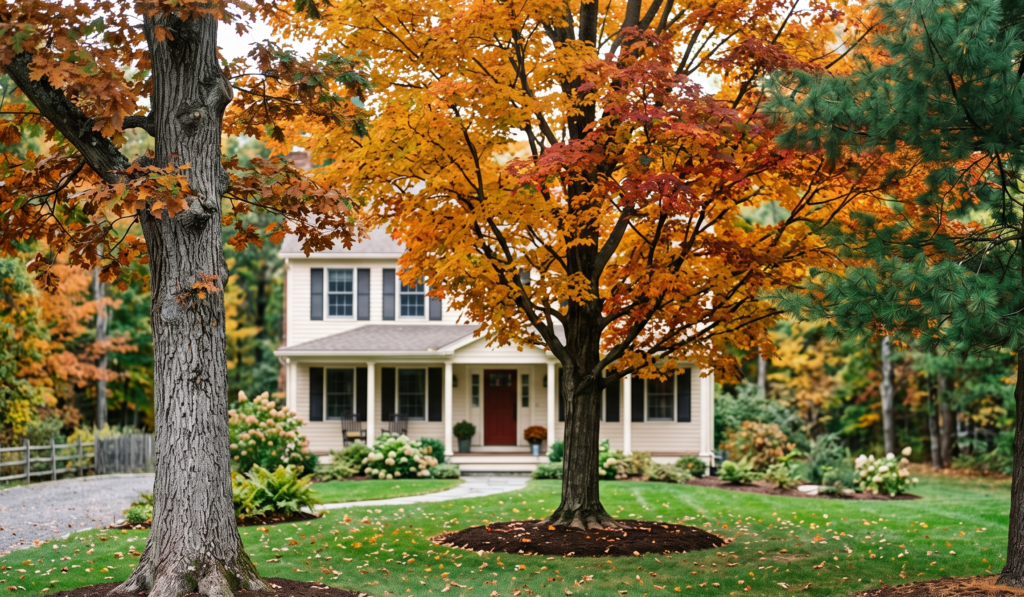
The sugar maple is New York’s official state tree and a hallmark of Upstate landscapes. Celebrated for its brilliant crimson, orange, and gold autumn foliage, this majestic hardwood is a primary focal point in yards across Monroe County. However, it requires deliberate management to thrive in suburban residential soil.
Identification & Characteristics
- Bark: Grayish-brown, smooth when young, developing deeply grooved, rough vertical plates as it matures.
- Foliage: Five-lobed leaves with U-shaped notches (sinuses) between lobes.
- Growth Habit: Dense, rounded to oval crown reaching heights of 60 to 75 feet.
Specific Care Needs & Vulnerabilities
- Compaction and Road Salt Sensitivity: Unlike red or silver maples, sugar maples have low tolerance for soil compaction and winter road salt runoff. Keep them positioned well back from primary roadways (such as Route 259 or Lake Road) and heavily plowed driveways.
- Lake Effect Ice Loading: Sugar maples develop tight, upright branch unions. Heavy wet snow and lake-effect ice accumulations can split major limbs. Regular structural pruning to eliminate weak, co-dominant stems will dramatically reduce canopy failure during winter storms.
- Pest and Pathogen Watch: Watch for signs of Verticillium wilt (sudden leaf yellowing and dieback in single branch sectors) and Maple decline triggered by root suffocation in slow-draining lacustrine clay.
Frequently Asked Questions
Q: Can I tap Sugar Maple in my suburban Upstate yard for syrup without damaging the tree?
A: Yes, healthy mature trees (at least 10–12 inches in diameter at chest height) can be tapped safely in late winter (typically February–March in Western NY). Limit taps to one per moderate tree, use clean, sterile taps, and remove spiles promptly in early spring so the taphole can compartmentalize before pest activity begins.
Q: Why are the outer branches of my sugar maple turning yellow and dying during mid-summer?
A: This is often a sign of maple decline, commonly caused by restricted root expansion in compacted, heavy clay soils or a fungal vascular infection like Verticillium wilt. An arborist can evaluate whether a root aeration treatment, soil decompaction, or micro-nutrient injection can stabilize the crown.
2. Red Oak (Quercus rubra) & White Oak (Quercus alba)
Oaks are among the longest-lived, structurally sturdiest shade trees across the Upstate landscape. Red oaks grow relatively fast and tolerate suburban soils well, while white oaks offer broad, spreading canopies that can endure for centuries when protected from mechanical root disturbance.
Identification & Characteristics
- Red Oak: Pointed, bristle-tipped leaf lobes, dark gray bark with flat, shiny vertical strips resembling ski tracks.
- White Oak: Rounded lobes without bristles, light gray, flaky or scaly bark, producing rounder acorns.
- Growth Habit: Massive, spreading crowns spanning 50 to 80 feet in height and width.
Specific Care Needs & Critical Timing
- Oak Wilt Protocol (NYS DEC Guidelines): Oak wilt (Bretziella fagacearum) is a devastating fungal pathogen spread by sap-feeding nitidulid beetles. Never prune or trim oak trees from April through July. Pruning during late fall or deep winter (dormancy) allows cuts to dry and seal without emitting sap scents that attract beetles carrying fungal spores.
- Soil Requirements: White oaks demand well-drained, acidic to neutral soil, whereas red oaks tolerate heavier clay soils common to the Lake Ontario plains. Apply organic wood chip mulch around the drip line (avoiding the root flare) to moderate root zone temperatures and retain moisture during July droughts.
- Structural Inspections: Look out for spongy moth defoliation, oak anthracnose, and two-lined chestnut borer, particularly on mature trees stressed by fluctuating spring weather.
Frequently Asked Questions
Q: What should I do if an oak limb breaks during a summer storm between April and July?
A: Immediately treat or seal fresh pruning wounds or storm tears with a breathable water-based wound sealant or pruning paint. While wound dressing is not recommended for normal tree pruning, it is an essential emergency measure on oaks during high-risk beetle flight months to mask volatile sap odors.
Q: How can I tell the difference between oak wilt and common oak anthracnose?
A: Anthracnose causes leaf spotting, browning along leaf veins, and minor spring defoliation, but infected trees typically push a second flush of leaves. Oak wilt causes rapid canopy wilt starting at the outer leaf margins, moving inwards, with extensive leaf drop in mid-to-late summer, often fatal within weeks for red oaks.
3. Eastern White Pine (Pinus strobus)
As the tallest native conifer in the Northeast, the Eastern White Pine provides dense windbreaks, nesting habitat, and continuous evergreen presence. While naturally fast-growing, its soft, brittle wood makes it uniquely vulnerable to Upstate New York storm fronts.
Identification & Characteristics
- Needles: Soft, flexible blue-green needles growing in bundles of five, 3 to 5 inches long.
- Cones: Slender, curved cones measuring 4 to 8 inches.
- Growth Habit: Pyramidal when young, developing an open, irregular horizontal branch tier at 80 to 100+ feet.
Specific Care Needs & Storm Risk Management
- Winter Wind and Snow Shedding: White pines carry dense evergreen needles through the winter. When heavy, moisture-laden lake-effect snow hits, horizontal branches snap under excess weight. Weight-reduction thinning by an experienced tree care professional helps wind and snow pass through the canopy without stripping major boughs.
- White Pine Weevil: This pest attacks and kills the terminal leader of young pines, causing trees to form crooked, multi-leader trunks prone to splitting later in life. Train single, central leaders early on.
- White Pine Blister Rust: Ensure clear airflow around the lower crown. Avoid planting white pines directly adjacent to alternative host plants such as wild currants or gooseberries (Ribes species).
Frequently Asked Questions
Q: Why are the inner needles of my white pine turning bright yellow and dropping in the fall?
A: In most cases, this is natural autumn needle drop (senescence). White pines shed 2- to 3-year-old interior needles every autumn while retaining the healthy current-season needles on the branch tips. If tip needles turn brown or droop, investigate root stress or needle blight.
Q: Can I prevent my white pines from snapping during lake-effect blizzards?
A: Proactive crown thinning and end-weight reduction on long horizontal branches reduce snow accumulation surface area and wind resistance. Pruning out co-dominant or damaged secondary leaders also prevents catastrophic trunk splits under heavy snow loads.
4. Silver Maple (Acer saccharinum)
Popularly planted across older Upstate subdivisions for rapid shade, the silver maple is a double-edged sword. While it tolerates soggy soils, flood conditions, and heavy clay with ease, its rapid growth rate results in brittle, soft wood that presents serious risks near roofs, driveways, and overhead utility lines.
Identification & Characteristics
- Bark: Silvery gray and smooth on young wood, shaggy and peeling in long, loose vertical strips on older trunks.
- Foliage: Deeply lobed, five-pointed leaves with pale, silvery undersides that flash in the wind before rain.
- Root System: Highly aggressive, shallow surface roots known to uplift sidewalks and intrude into drainage lines.
Specific Care Needs & Structural Mitigation
- Frequent Canopy Maintenance: Because silver maples form narrow, V-shaped crotches with included bark, they are among the most frequent culprits of storm emergencies in high-wind zones. Schedule crown inspections every 2 to 3 years to prune out deadwood and reduce long, heavy, overextended limbs.
- Decay and Cavity Management: Silver maples heal slowly from large, aggressive flush cuts. Hollow trunks and internal rot are common in specimens older than 50 years. A professional arborist evaluation can assess internal wood density to determine whether structural cabling, dynamic bracing, or proactive removal is warranted.
Frequently Asked Questions
Q: Can I cut the large exposed surface roots of my silver maple to save my lawn?
A: Cutting large roots (greater than 2 inches in diameter) close to the trunk causes severe stability loss and creates major rot entry points into the base of the tree. Instead of cutting roots, top-dress the area lightly with compost and mulch or establish a shade garden with shallow-rooted ground cover.
Q: Is a hollow silver maple trunk an automatic candidate for removal?
A: Not necessarily. Trees can retain substantial structural strength with hollow heartwood if the outer shell of sound sapwood and cambium is thick enough. An ISA-certified arborist can perform a sonic tomography or resistance drilling test to evaluate remaining wall thickness and wind resistance.
5. Eastern Hemlock (Tsuga canadensis)
The Eastern Hemlock is an integral, shade-tolerant native evergreen commonly found lining cool ravines, wooded borders, and naturalized acreage throughout Western and Central New York. In suburban yards, it makes an exceptional screen or hedge, but it currently faces an existential threat.
Identification & Characteristics
- Foliage: Flat, blunt, short needles arranged along twigs in two rows, featuring two prominent white stomatal stripes underneath.
- Cones: Small, delicate oval cones hanging at twig tips.
- Bark: Reddish-brown, scaly, and deeply furrowed with age.
Specific Care Needs & Pest Containment
- Hemlock Woolly Adelgid (HWA): The single greatest danger to hemlocks across New York State is HWA (Adelges tsugae). Inspect the undersides of hemlock twigs in late autumn and spring for tiny, white, cotton-like wax puffs at the needle bases. Left untreated, HW A starves the tree, causing needle drop and mortality within 4 to 10 years. Systemic soil injections or targeted trunk sprays can preserve vulnerable trees.
- Drought & Root Care: Hemlocks have shallow root systems and low drought tolerance. During hot, dry summer stretches, deep root watering combined with a 2- to 4-inch layer of organic mulch prevents root stress.
Frequently Asked Questions
Q: How often do hemlock trees need treatment for Hemlock Woolly Adelgid (HWA)?
A: Modern systemic insecticide treatments (such as imidacloprid or dinotefuran applied via soil drench, soil injection, or trunk injection) typically protect the tree for 4 to 7 years per treatment cycle, allowing trees to maintain vigor while reducing long-term chemical application.
Q: Why is my hemlock hedge thinning out at the bottom?
A: Hemlocks need some light to maintain lower foliage. If hedges are sheared wider at the top than the bottom, the upper canopy blocks sunlight from lower branches, causing interior dieback. Shape hemlock hedges with an A-frame profile so lower limbs receive adequate sun.
6. Crabapple (Malus spp.) & Flowering Dogwood (Cornus florida)
Small-to-medium ornamental trees add seasonal color, spring blossoms, and architectural structure to front yards and landscape beds. However, our damp, humid Upstate springs create the ideal environment for fungal foliage diseases.
Identification & Characteristics
- Flowering Crabapple: Deciduous small tree (15–25 ft), blooming in white, pink, or red in May, producing small persistent fruit.
- Flowering Dogwood: Understory tree (15–30 ft) with distinctive four-petal-like white or pink bracts, round flower buds, and checkered “alligator hide” bark.
Specific Care Needs & Disease Management
- Apple Scab and Cedar-Apple Rust (Crabapples): Damp lake breezes encourage apple scab fungus, causing olive-green leaf spots, premature defoliation by mid-summer, and pitted fruit. Select scab-resistant cultivars whenever planting new stock, clear fallen autumn leaves to eliminate overwintering spores, and prune interior water sprouts to maximize sun and air circulation throughout the branch scaffold.
- Dogwood Anthracnose: Flowering dogwoods are sensitive to anthracnose (Discula destructiva), which causes leaf spots, twig dieback, and trunk cankers. Plant dogwoods in locations receiving morning sun to dry leaves quickly, or choose disease-resistant Kousa Dogwood (Cornus kousa) or hybrid varieties for high-humidity areas.
Frequently Asked Questions
Q: Can I stop my crabapple from dropping leaves in July without spraying heavy chemicals?
A: Cultural controls significantly reduce scab impact: prune the canopy during winter to open up air flow, rake and dispose of all fallen leaves in the fall to stop fungal spores from overwintering in your soil, and apply an organic protective fungicide spray program early in spring just as bud break occurs.
Q: Is Kousa Dogwood a better option for Monroe County landscapes than native Flowering Dogwood?
A: Yes, in many residential settings. Cornus kousa (Asian Dogwood) exhibits superior resistance to dogwood anthracnose and powdery mildew, blooms 2 to 3 weeks later in the spring (reducing late-frost flower damage), and tolerates full sun and suburban soil variations better.
7. Green & White Ash (Fraxinus pennsylvanica & Fraxinus americana)
Ash trees once dominated Upstate streets, parks, and residential lots, valued for their fast growth, symmetrical crowns, and hard, resilient wood. Today, they represent one of the region’s most urgent tree safety concerns.
Identification & Characteristics
- Bark: Tight, diamond-patterned corky ridges across the trunk.
- Foliage: Pinnately compound leaves with 5 to 9 leaflets positioned opposite one another on the branch.
- Branching: Opposite branching (twigs and buds grow directly across from each other).
Critical Care & Emerald Ash Borer (EAB) Action
- Assessing EAB Infestation: The Emerald Ash Borer has caused widespread ash mortality across Monroe County and surrounding regions. Telltale symptoms include D-shaped exit holes in the bark, vertical trunk splitting, canopy thinning starting from the top down, epicormic sprouting (suckers emerging along the lower trunk), and heavy woodpecker activity stripping off outer bark (known as “blonding”).
- Save or Remove Decision: If an ash tree has lost less than 30% of its canopy, it may still be protected using biennial trunk injections of emamectin benzoate. If canopy dieback exceeds 30–50%, the vascular system is compromised, and the tree cannot distribute systemic treatments. Dead or dying ash trees become exceptionally brittle, shedding limbs unpredictably. Hazardous ash trees positioned near homes, fences, power lines, or walkways should be removed promptly using professional rigging and bucket equipment before they turn structurally unsound.
Frequently Asked Questions
Q: How quickly does an untreated ash tree become a structural hazard once infected with EAB?
A: Ash trees deteriorate rapidly. Once EAB larvae girdle the inner cambium, branch moisture drops swiftly, making the wood dangerously brittle within 1 to 2 years of noticeable canopy dieback. Delaying removal increases danger and often requires crane-assisted dismantling rather than manual climbing.
Q: Can dead ash wood be saved and burned as firewood in Upstate New York?
A: Yes, but keep it on your own property. New York State strictly regulates the transport of untreated firewood (NYS DEC Firewood Regulations restrict moving untreated firewood beyond a 50-mile radius) to halt the spread of invasive pests and fungal pathogens.
Seasonal Tree Care Matrix for Upstate New York
Use this seasonal calendar to align your tree maintenance tasks with New York’s distinct climate patterns.
| Season | Priority Tree Care Focus | Key Target Species & Actions |
| Early Spring (Mar – Apr) | Soil prep, structural hazard assessment, early pest checks | Inspect branches after winter storms; apply dormant horticultural oils to scale insects; avoid heavy machinery over wet, thawed ground. |
| Late Spring (May–Jun) | Foliage disease monitoring, growth management | Monitor crabapples and dogwoods for fungal leaf spots; scout hemlocks for hemlock woolly adelgid; strictly observe no-prune windows on oaks. |
| Summer (Jul – Aug) | Hydration management, drought defense, deadwood cleanup | Water young plantings deeply during dry spells; inspect mature silver maples and pines for hanging deadwood; check ash canopies for EAB thinning. |
| Fall (Sep – Oct) | Root health, fertilization, cleanup, risk surveys | Apply slow-release root fertilizer where appropriate; clear diseased leaves beneath fruit trees; schedule pre-winter hazard evaluations for high-risk trees near buildings. |
| Winter (Nov – Feb) | Dormant structural pruning, hazard removals, storm recovery | Optimal window to prune Oaks (preventing Oak Wilt) and hardwoods; thin dense canopies to prevent lake-effect snow damage; remove dead/hazardous trees safely over frozen ground. |
Frequently Asked Questions
Q: Is late fall or winter truly the best time for major tree pruning in Monroe County?
A: Yes. Dormant winter pruning offers clear visibility of structural branch architecture without leaves, minimizes pathogen transmission (fungi and insect vectors are inactive), and allows heavy equipment to access yards over frozen soil with minimal lawn turf compaction.
Q: Should I fertilize my trees in late summer or early fall?
A: Avoid high-nitrogen fertilizers in late summer, as they stimulate tender new foliage that cannot harden off before the first frost. Instead, opt for late fall deep-root bio-stimulants or slow-release micro-nutrients after trees enter dormancy.
Essential Pruning & Root Health Principles for Upstate Soils
Keeping your trees safe and vigorous across changing seasons comes down to three foundational practices:
1. Prune with Purpose—Never “Top” a Tree
Topping—cutting back major scaffold branches to blunt stubs—ruins a tree’s natural architecture, creates large wounds that rot, and stimulates weak, fast-growing epicormic sprouts that snap easily under wind and snow. Instead, rely on crown thinning, crown cleaning, and directional clearance trimming. Professional tree trimming and pruning services remove dead, diseased, or rubbing limbs while maintaining the natural branch collar so the tree can compartmentalize cuts cleanly.
2. Guard the Root Flare and Soil Zone
Upstate New York soils—especially along the Ontario lowlands—often contain dense, slow-draining clay.
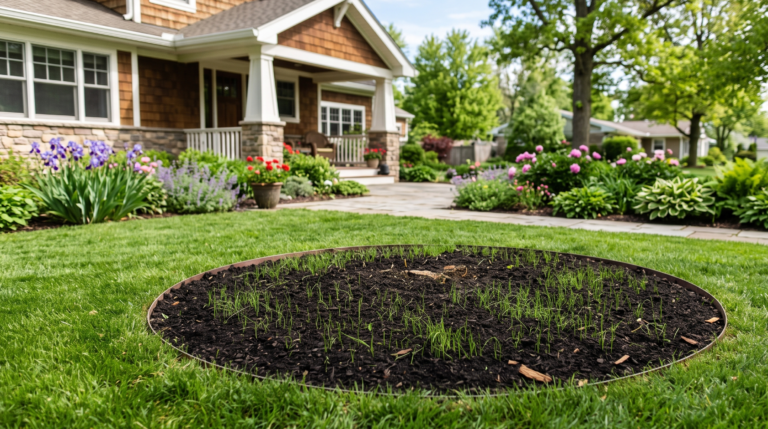
- Never pile mulch against tree trunks in “mulch volcanoes.” Piled mulch traps moisture against the bark, encouraging trunk rot and girdling roots.
- Spread organic mulch 2 to 4 inches deep in a flat circle, leaving a clear 3- to 6-inch gap around the base of the trunk where root flares meet the ground.
- Minimize vehicle parking, soil tilling, or heavy construction within the tree’s dripline to preserve delicate feeder roots in the top 12 inches of soil.
3. Proactive Storm Mitigation Along Lake Ontario
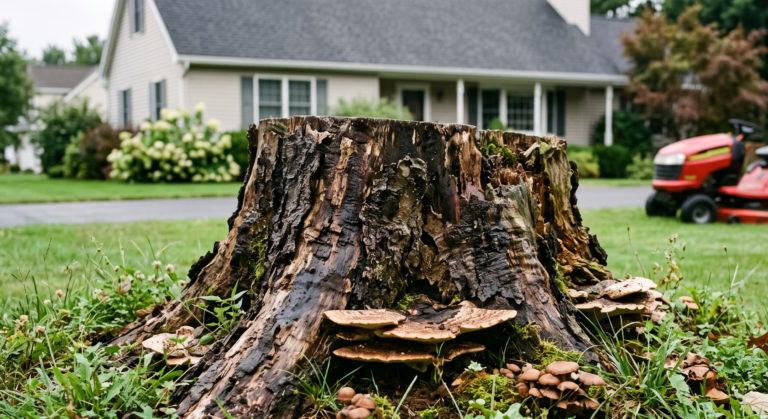
High-wind events and lake-effect squalls test tree structures every season. Regular inspections look for cracked crotches, decay fungi (conks or mushrooms) at the base, heaving soil, and sudden canopy leaning. Addressing structural defects through corrective pruning, crown weight reduction, or timely hazard removal protects your home, property lines, and family before severe weather hits.
Frequently Asked Questions
Q: How does a “mulch volcano” harm mature trees?
A: Piling mulch directly against the bark keeps the trunk damp, leading to fungal wood rot, bacterial infections, rodent nesting, and adventitious root growth that can encircle and girdle the trunk, ultimately choking the tree’s sap flow.
Q: How far out does a tree’s root system extend in heavy clay soil?
A: Tree roots typically extend 2 to 3 times the width of the branch canopy (the drip line), with more than 85% of fine absorbing roots located in the top 12 to 18 inches of soil. Protecting this perimeter from heavy vehicle traffic and soil excavation is vital for survival.
When to Call an ISA-Certified Arborist
While basic watering, proper mulching, and minor ground-level pruning are well within a homeowner’s reach, large-scale canopy work and hazardous tree removals require specialized rigging, safety gear, and formal training in tree biomechanics.
You should arrange an on-site arborist evaluation if you notice:
- Large limbs or branches overhanging roofs, power lines, or driveways.
- Deep trunk cavities, hollow sections, or mushrooms growing from root collars.
- Asymmetrical crown dieback, sudden branch shedding, or uncharacteristic needle loss.
- Mature ash trees exhibiting bark stripping, thinning crowns, or sucker growth.
- Structural damage, cracked trunk forks, or hanging boughs after heavy snow and wind storms.
Frequently Asked Questions
Q: What is the difference between a general landscaper and an ISA-certified arborist?
A: An ISA-certified arborist has documented professional field experience, passed rigorous examinations covering tree biology, pruning standards (ANSI A300), soil management, and tree risk assessment (TRAQ), and carries industry-specific liability insurance for high-hazard canopy operations.
Q: Will homeowner’s insurance cover preventative tree removal?
A: Generally, standard homeowner policies only cover tree removal after a tree falls and damages an insured structure (like a house, garage, or fence). They rarely cover proactive removal of standing dead or diseased trees, making early arborist evaluation the best way to prevent out-of-pocket structural damage.
Tree Service Near Me: Serving Hilton, Parma, Greece & Monroe County
When severe gales sweep across Lake Ontario or heavy winter ice destabilizes tree limbs, searching for a dependable tree service near me means you need prompt, skilled attention before structural limbs cause costly property damage.
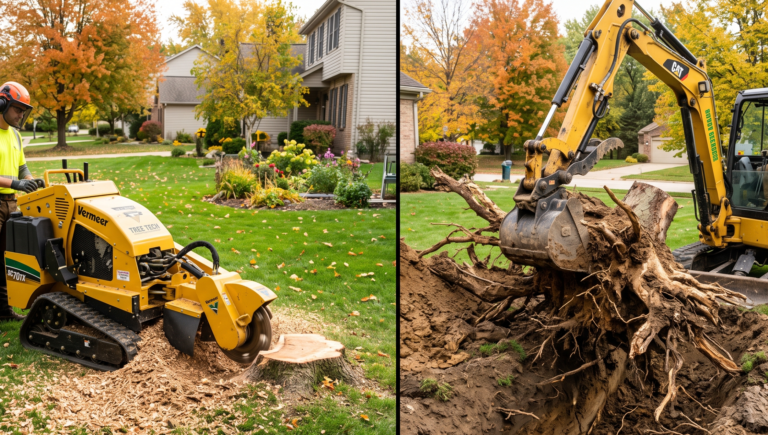
Branching Out Tree Service provides complete tree health evaluations, structural hazard pruning, precision tree removal, and stump grinding across northwest Monroe County and neighboring communities. Because our equipment, crane access, and certified arborists are dispatched locally, you get immediate response times from specialists who understand regional clay soils, coastal weather extremes, and town tree preservation guidelines.
Our Primary Service Footprint:
- Hilton & Town of Parma: Rapid dispatch along Route 259, Route 18, Parma Center Rd, and lakeside neighborhoods.
- Greece & North Greece: Complete tree pruning, crown clearing, and hazard removal across residential subdivisions.
- Brockport & Clarkson: Heritage hardwood care, oak preservation, and storm-damage limb clearing.
- Spencerport & Ogden: Ash tree hazard removals and proactive crown thinning near utility clearings.
- Hamlin & Lake Ontario Shore: Lakefront storm mitigation, windbreak reinforcement, and hemlock preservation.
Find Our Hilton, NY Headquarters & Service Radius
Use the interactive Google Map below for driving directions to our dispatch location, or contact our office to book your on-site arborist consultation:
Frequently Asked Questions
Q: How quickly can your emergency tree crew respond to a fallen tree in Hilton or Greece?
A: For hazardous conditions where trees or large limbs have fallen across driveways, power drops, or roofs, our emergency crews prioritize same-day and 24/7 rapid dispatch across Monroe County.
Q: Do you offer free on-site tree care quotes near me?
A: Yes. A certified arborist inspects the tree on-site, assesses equipment access, hazards, and branch integrity, and provides a clear, written estimate with zero obligation.
Keep Your Property’s Trees Safe, Healthy, and Beautiful
Every species on your property has unique nutritional, structural, and seasonal care requirements. Partnering with a locally owned, certified tree care team ensures your landscape is inspected through the lens of local soil conditions, regional pest pressures, and regional weather extremes.
Whether you need seasonal tree trimming to prep your canopy for winter, emergency storm response, stump grinding, or a comprehensive health evaluation for an aging shade tree, Branching Out Tree Service is here to help.
- Location: 259 Walker Rd, Hilton, NY 14468
- Service Areas: Hilton, Parma, Greece, Spencerport, Brockport, Hamlin, and greater Monroe County
- Phone: (585) 667-8733
- Credentials: ISA-Certified Arborists | Fully Licensed & Insured | TCIA Accredited | 24/7 Emergency Storm Service
Contact Branching Out Tree Service Today for a Free On-Site Property Estimate