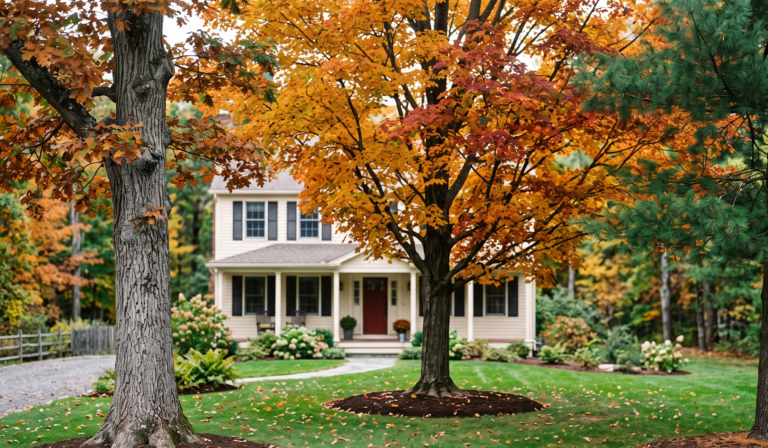
When a mature tree comes down on your property, the initial relief of eliminating a hazardous limb or opening up sky space is often followed by a practical dilemma. Looking across your lawn, you are left with an unfamiliar gap in the canopy, a wide ring of fresh sawdust, and an uneven patch of exposed soil. Homeowners across Monroe County frequently ask our certified arborists the same question: what to do with your yard after a tree is removed? Whether you have completed a scheduled tree removal project or you are cleaning up after a Lake Ontario wind event, turning this empty footprint into an attractive, thriving outdoor living area requires a firm grasp of soil chemistry, subterranean root behavior, and local landscape design.
Restoring your outdoor space involves much more than raking up wood chips and tossing down retail grass seed. Below the turf line, the soil profile has spent decades adjusting to heavy root compression, intense moisture uptake, and localized nutrient distribution. Addressing these underground biological changes through complete stump remediation, targeted soil aeration, strategic nutrient amendments, and intentional site redesign ensures your lawn or garden rebounds successfully. By taking an informed approach, you can turn a bare, disrupted space into one of the most resilient and beautiful focal points on your entire property.
1. Clear the Ground: Stump Grinding vs. Total Excavation
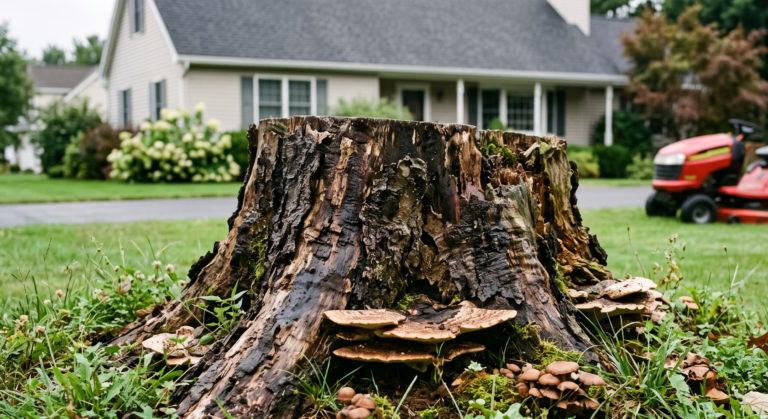
Before planning any surface restoration, you must address what remains below the cut: the stump and its root flare. Leaving an untreated stump creates a cascade of property headaches, including mower blade damage, tripping hazards for children, fungal spore colonies, and pest infestations from carpenter ants and subterranean termites.
Grinding Below the Grade
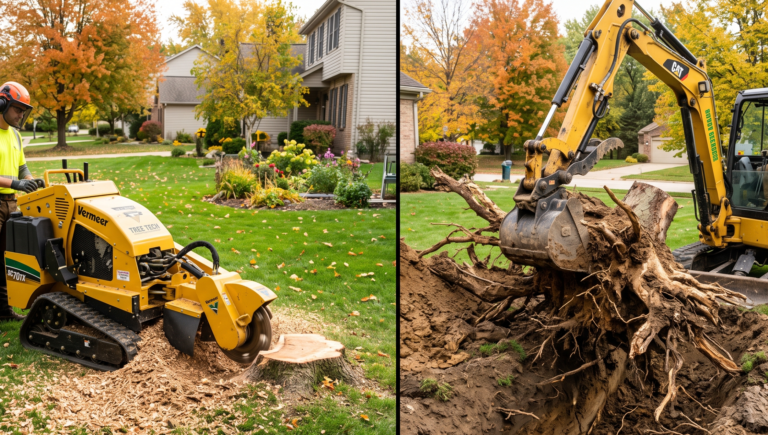
For most residential yards, professional stump grinding is the gold-standard recommendation. High-powered commercial grinders plane the trunk down 6 to 12 inches below the turf level. This eliminates the visible stump, cuts through the primary surface buttress roots, and leaves the underground root network to decay naturally over time without causing major craters across your lawn.
Full Excavation and Extraction
Full excavation requires heavy machinery, such as a mini-excavator or backhoe, to rip the entire central root ball out of the earth. While this completely eliminates buried wood, it leaves a massive excavation pit, tears through adjacent turf, and costs significantly more in labor and disposal fees. Total extraction is generally reserved for situations where you plan to pour a concrete foundation, install a retaining wall, or lay deep utility lines directly through the former trunk area.
Managing the Wood Chip Surplus
Stump grinding produces a significant mound of mixed sawdust, topsoil, and fresh wood shavings. While this material looks like bag-bought garden mulch, fresh chips should not be left packed tightly inside the freshly ground hole. As raw wood begins decomposing underground, soil bacteria consume massive quantities of ambient nitrogen to break down the carbon-heavy cellulose. This process induces nitrogen lockup, temporarily starving nearby plant roots and new grass seed of the primary nutrient needed for green foliage.
Shovel out the bulk of the fresh grindings. You can spread them in thin, two-inch layers across outer ornamental beds as surface mulch, age them in a compost pile for 6 to 12 months, or have your tree service crew haul them away.
Frequently Asked Questions
Q: Can I leave a tree stump to rot naturally instead of grinding it?
A: While a stump will eventually rot on its own, the process typically takes anywhere from 5 to 15 years depending on wood density and climate. During that prolonged breakdown, the lingering wood attracts subterranean termites, carpenter ants, and wood-decaying fungal spores, while remaining a constant tripping hazard and an obstacle for lawn equipment.
Q: How deep should a stump grinder cut below the soil line?
A: A commercial stump grinder should typically cut between 6 and 12 inches below the natural lawn grade. This depth is sufficient to eliminate the structural core and flare roots, providing ample room above to backfill with clean topsoil and re-establish healthy turfgrass or shallow-rooting garden perennials.
Q: What should I do with all the sawdust and wood chips produced by grinding?
A: Shovel out at least 80 percent of the wood shavings from the hole. You can spread them across mature ornamental shrub borders as a top-dressing weed barrier, add them to a backyard compost bin with nitrogen-rich greens, or request that your tree care contractor haul them off-site entirely.
2. Soil Restoration and Underground Biology
A tree extracts tons of minerals and water from the ground over its lifespan. Once the tree is gone, the underground ecology shifts dramatically. Restoring this soil foundation is essential before any seed or sapling will thrive.
Combatting Soil Compaction
Decades of root mass expansion combined with heavy machinery foot traffic during the tree removal process compress surrounding soil particles. Compacted ground lacks the pore space necessary for oxygen exchange and water percolation.
- Use a broadfork, mechanical aerator, or garden spade to loosen the compacted subsoil 8 to 10 inches deep around the former canopy drop line.
- Avoid rototilling around the root zones of adjacent healthy trees, as tilling tears through their delicate feeder roots.
Replenishing Soil Nutrients and Correcting pH
Old tree roots leave soil pockets depleted of nitrogen, phosphorus, and vital trace minerals. Furthermore, trees like conifers (pines, spruces, and hemlocks) deposit acidic needles that lower topsoil pH below levels preferred by standard turfgrasses.
- Test the Soil: Conduct a simple home or extension soil test to determine your baseline pH and organic matter percentage.
- Incorporate Organic Matter: Backfill the grinding cavity with a balanced mixture of screened topsoil, aged leaf compost, and coarse sand (if dealing with heavy clay).
- Counteract Acidity: If the site previously hosted acidic evergreens, work agricultural pelletized limestone into the top 4 inches to bring soil pH back into the neutral 6.2–7.0 range.
- Add Nitrogen: Apply a slow-release, nitrogen-rich organic fertilizer (such as blood meal or a balanced 10-10-10 starter formula) to replace the nitrogen consumed by residual decaying wood fibers.
Frequently Asked Questions
Q: Why does the soil dry out so quickly where a tree was taken down?
A: Once a dense canopy is removed, direct sunlight and unobstructed wind beat down on the freshly exposed earth, causing surface moisture to evaporate rapidly. Additionally, decaying wood fragments underneath can act as a sponge, pulling moisture away from the surrounding upper topsoil layer.
Q: Do I need to apply lime to my soil after taking down an evergreen tree?
A: Evergreens such as pines and spruces shed needles that gradually acidify the upper topsoil. Testing the soil pH first is best practice; if the reading falls below 6.0, broadcasting pelletized agricultural lime helps restore the pH to the 6.2–7.0 range favored by standard lawn grasses.
Q: How does decaying underground root mass affect garden plants?
A: When soil microbes work to decompose buried carbon-rich cellulose, they absorb large amounts of available soil nitrogen. Without adding nitrogen amendments or aged compost, neighboring shallow-rooted flowers and vegetables may experience stunted growth and yellowing leaves.
3. Repairing Your Lawn: Seeding vs. Sodding
A bare, circular crater in an otherwise lush lawn disrupts your property’s curb appeal. Returning the area to turfgrass is one of the most common post-removal choices, but success depends on proper site preparation.
Sub-Base Stabilization
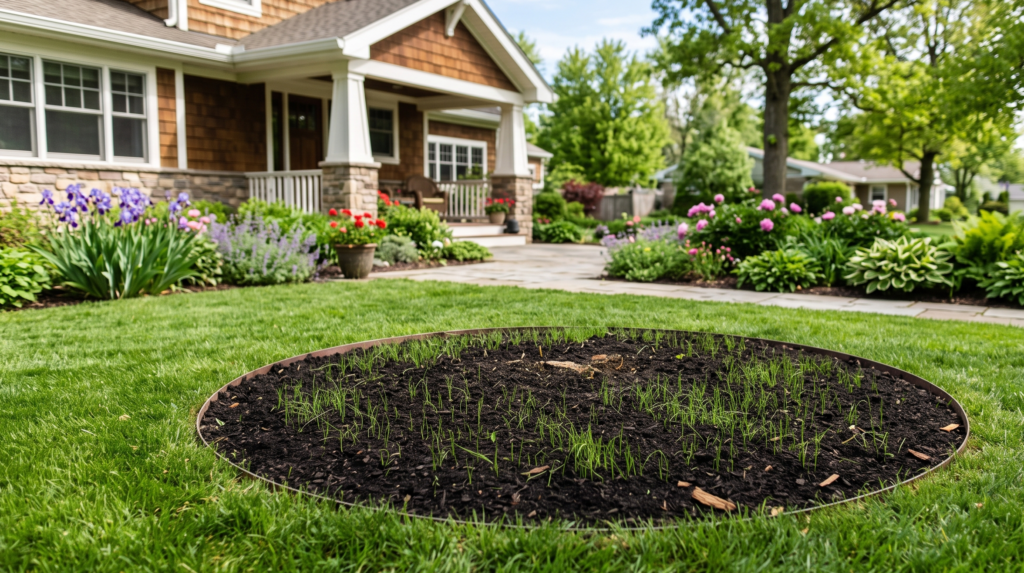
Never fill the stump hole flush and throw down seed immediately. As residual taproots break down 12 to 24 inches down, the ground will naturally settle. Backfill the hole in three-inch lifts, lightly tamping each layer with the back of a flat shovel or a lawn roller to eliminate hidden air pockets. Crown the final fill roughly 1 to 1.5 inches higher than the surrounding lawn surface; rainfall will naturally settle it flush over the coming weeks.
Selecting Seed vs. Sod
- Turfgrass Seed: Cost-effective and provides seamless blending with your existing lawn variety. In cool-weather and transitional regions, select a high-grade mix of turf-type tall fescue, Kentucky bluegrass, and perennial ryegrass. Fescues offer deep rooting and drought resilience, while bluegrass fills in horizontally via underground rhizomes.
- Cultivated Sod: Instant gratification with lower weed intrusion. Ensure the soil bed is scraped flat and moist before laying cut slabs. Stagger sod seams in a brickwork pattern, roll to guarantee root-to-soil contact, and water daily for the first two weeks until the root system knits into the ground.
Post-Planting Hydration Schedule
Whether you opt for broadcast seeding or freshly unrolled sod slabs, hydration control dictates your success. Grass seed requires consistent, light misting two to three times daily for the first 14 to 21 days so the germinating seeds never dry out. For sod, soak the installation thoroughly once per day for two weeks, ensuring the water penetrates through the sod backing and at least two inches down into your amended backfill.
Frequently Asked Questions
Q: Can I seed right over the leftover sawdust from the grinder?
A: No. Grass seed will germinate poorly or fail entirely in raw sawdust because it holds uneven moisture and completely lacks plant-accessible nitrogen. You must dig out the shavings and replace them with a quality loam and compost mixture before seeding.
Q: How soon after stump grinding can I lay new sod?
A: You can lay fresh sod immediately after the stump hole is excavated of wood chips, backfilled with stabilized loam and compost, tamped firmly, and leveled. Water the bare ground lightly before placing the sod to encourage rapid root adhesion.
Q: Why is my new patch of grass sinking after a few months?
A: Sinking happens when backfill is added loosely in a single pour without compaction or as deep-seated root cavities rot out underneath. To fix minor depressions, top-dress the settled area with a 50/50 sand and compost mixture in thin half-inch applications so existing turf can continue growing through.
4. Replanting New Trees: Rules, Spacing, and Species Selection
Homeowners often feel an urge to plant a new, younger tree in the exact spot where the old one stood. From an arboricultural standpoint, planting directly on the center of a fresh stump grinding is rarely successful.
Why Offset Replanting?
Even after thorough grinding, the dense woody core beneath the grinder teeth takes years to fully rot. Young root tips trying to anchor themselves hit a wall of dense wood and nitrogen-poor shavings. Instead, offset your new tree planting by 4 to 8 feet away from the center of the old trunk. This gives the sapling access to undisturbed soil, balanced moisture, and established microbial networks.
Planting Mechanics
When setting your replacement tree into the offset site, dig a broad, saucer-shaped planting hole two to three times wider than the root container, but no deeper than the height of the root ball. Keep the trunk flare—the spot where the uppermost roots spread outward from the trunk base—one to two inches above the finished landscape grade. Covering the root flare with backfill soil or piling mulch against the bark suffocates the cambium tissue and causes premature decline.
Watch Out for Allelopathy
If your removed tree was an Eastern Black Walnut (Juglans nigra), it produced a chemical compound called juglone. Juglone acts as a natural biochemical herbicide, concentrating in the leaves, bark, and roots to suppress competing vegetation. Juglone stays active in surrounding soil for up to two years after a walnut is removed. Avoid planting sensitive species nearby during this period, including:
- Ornamental plants: Azaleas, rhododendrons, hydrangeas, and lilacs.
- Edibles: Tomatoes, Peppers, and Potatoes.
- Resilient alternatives: If you must plant near an old walnut site, choose juglone-tolerant trees such as sugar maple, eastern redbud, river birch, flowering dogwood, or Canadian hemlock.
Frequently Asked Questions
Q: Why is it bad to plant a new tree in the exact same hole?
A: The center of the old hole is choked with coarse root fragments and decaying woody debris. A young sapling planted directly in that zone will struggle with severe nitrogen deficiency, poor root anchoring, and unstable soil settlement as the old core rots away underneath.
Q: How far away from the old stump should the new tree be situated?
A: Aim to offset your new planting by at least 4 to 8 feet away from the center of the old trunk. This positions the new root ball in native, undisturbed soil with balanced microbial activity and structural stability.
Q: How long does juglone toxicity remain in the soil after cutting down a black walnut?
A: Juglone can persist in the surrounding soil for 12 to 24 months after a black walnut tree is removed, as decaying roots slowly release the compound. Wait at least two seasons before planting juglone-sensitive ornamentals, or choose tolerant native tree species.
5. Converting the Space into Garden Beds or Native Plantings
If your old tree cast heavy shade for decades, its removal introduces something your yard hasn’t experienced in years: abundant, unfiltered sunlight. Areas that once supported only sparse moss or shade-tolerant hostas can now sustain vibrant perennial gardens, raised beds, or pollinator habitats.
Designing a Pollinator Haven
Turning a former tree site into a native perennial bed supports local biodiversity, attracts birds, and reduces your weekly lawn mowing chores:
- Sunlight Calibration: Monitor the site for a full weekend to calculate daily direct sun exposure. Six or more hours of direct light qualifies as full sun, opening the door for species that previously struggled on your property.
- Layered Native Perennials: Pair deep-rooting native prairie species (like Purple Coneflower, Black-Eyed Susan, and Butterfly Weed) with ornamental bunchgrasses (such as Little Bluestem or Switchgrass). Native plants adapt seamlessly to local rainfall patterns and develop deep roots that break through decaying woody remnants under the surface.
- Top-Dressing: Top the finished bed with a clean, two-inch layer of aged bark mulch. This suppresses opportunist weed seeds that germinate when exposed to new sunlight.
Raised Garden Beds for Backyard Vegetables
If extensive root networks make tilling a traditional garden bed frustrating, construct a cedar or stone raised garden bed directly over the old tree site:
- Lay untreated corrugated cardboard over the cleared ground to smother lingering weed seeds and encourage earthworm activity.
- Build garden bed walls 12 to 18 inches high using rot-resistant cedar, hemlock, or composite wall stones.
- Fill with a high-yield blend of 50% topsoil, 30% organic compost, and 20% worm castings or perlite. You will enjoy a loose growing medium completely unaffected by residual tree roots decaying underneath.
Frequently Asked Questions
Q: What should I do with my existing shade plants now that the canopy is gone?
A: Hostas, bleeding hearts, and delicate ferns adapted to deep shade will scorch under intense all-day summer sun. Dig them up during early spring or late autumn and transplant them to protected areas on the north or east side of your home.
Q: Can I build a raised vegetable garden over an old stump footprint?
A: Yes, raised beds are an ideal solution. Building a bed 12 to 18 inches deep and filling it with fresh compost and topsoil allows your vegetables to develop strong, healthy root systems above the decaying root zone.
Q: Which native perennials are best for breaking through stubborn subsoil?
A: Species like Purple Coneflower (Echinacea purpurea), Wild Bergamot (Monarda fistulosa), and Switchgrass (Panicum virgatum) have deep taproots and fibrous root networks capable of pushing through dense ground and decaying wood channels.
6. Hardscaping and Outdoor Living Transformations
Perhaps the tree was removed because its expanding roots were lifting driveways, cracking patio pavers, or threatening your home’s foundation. If you do not wish to re-seed or plant garden beds, convert the footprint into a functional hardscape feature.
Gravel Fire Pit Patio
A circular gravel patio is an ideal, cost-effective way to occupy a former tree site:
- Dig down 4 to 6 inches, leveling the cleared footprint.
- Line the excavation with heavy-duty commercial woven geotextile fabric. This prevents gravel from sinking into subsoil voids as buried roots decompose.
- Spread and tamp down a 3-inch base layer of crushed stone aggregate.
- Top with 2 inches of decorative pea gravel, crushed slate, or river stone.
- Center a freestanding steel fire bowl or build a ring using retaining wall blocks, complete with Adirondack chairs for family gatherings.
Paver Sitting Patios and Pergolas
If you are planning an interlocking concrete paver patio, flagstone terrace, or pergola, soil stability is non-negotiable. Because underground roots shrink and leave hollow pockets as they rot, pavers laid over simple backfill will shift and settle unevenly within two seasons.
- Excavate Deeper: Extract the central root ball entirely or dig down at least 12 inches to stable, unyielding earth.
- Mechanical Compaction: Lay crushed base stone in two-inch lifts, running a mechanical plate compactor over each layer.
- Sub-Base Separation: Always include geotextile stabilization fabric underneath the aggregate base to distribute structural loads evenly across former root channels.
Frequently Asked Questions
Q: How long should I wait before laying a concrete or paver patio over a ground stump?
A: If the stump was simply ground 6 to 8 inches down, wait at least one full freeze-thaw cycle or season of rain to observe soil settlement. For immediate hardscape projects, excavate the area to a depth of 12 inches or more, compact crushed stone aggregate in layers, and install woven geotextile fabric underneath.
Q: Why is geotextile fabric critical beneath gravel or pavers on these sites?
A: As ancient feeder roots decay underground, tiny underground voids form. Geotextile fabric bridges these localized weak points, preventing your base aggregate and surface stones from sinking into the subgrade.
Q: Can I install a fire pit directly on the ground where the tree was removed?
A: Never build an open fire directly on raw stump ground. Lingering underground roots can smolder invisibly for days beneath the soil surface. Clear down to mineral soil, construct a non-combustible gravel or stone base, and elevate the fire using an approved metal bowl or lined stone masonry pit.
7. Ongoing Maintenance: Tree Suckers, Fungi, and Settling
Transforming your landscape is an ongoing process. Even after clean stump grinding, the underlying biological system continues to adjust for several seasons. Here is how to handle the three most common post-removal side effects:
Controlling Aggressive Root Suckers
Certain tree species—such as the Tree of Heaven (Ailanthus altissima), black locust, poplars, willows, and sweetgums—refuse to give up quietly. Their subterranean root networks store massive amounts of energy. For months after tree removal, these roots will push dozens of vigorous sprouts (suckers) through your fresh lawn or garden beds.
- Mechanical Pruning: Snip sprouts flush with the soil using hand pruners as soon as they emerge. Deprived of leaves to conduct photosynthesis, the root system will exhaust its stored carbohydrate reserves within one to two growing seasons.
- Targeted Botanical Control: If suckers are overtaking the lawn, treat freshly cut shoot tips directly with a targeted systemic herbicide applied with a foam brush. This prevents overspray onto surrounding grass while translocating the product directly into the root tissue.
Dealing with Lawn Mushrooms and Fairy Rings
Homeowners often worry when rings of toadstools, shelf fungi, or white mushrooms sprout where a tree once stood.
- Mushrooms are the reproductive fruiting bodies of beneficial saprophytic fungi breaking down underground organic matter (rotting wood roots).
- They are not harming your lawn or soil; they are actively transforming dense wood carbon into plant-available humus.
- Simply knock them over with a garden rake or mow over them. Never consume wild yard mushrooms, and keep playful pets away until the flush subsides.
Remedying Long-Term Soil Settling
Two to three years post-removal, you may notice a shallow depression developing where the trunk once rested. This is normal settling caused by root decomposition. Keep a 50/50 blend of coarse sand and rich compost on hand. Top-dress the low spot in early spring with a 1/2-inch layer at a time, allowing existing grass blades to grow through while gently raising the grade back to an even plane.
Frequently Asked Questions
Q: Are the mushrooms growing where my tree was hazardous to my lawn?
A: No. Saprophytic mushrooms do not attack living lawn grasses; they feed solely on dead, decaying organic matter buried beneath the surface. They will cycle out naturally once the underground roots are digested.
Q: How do I stop tree suckers from sprouting through my lawn?
A: Cut them back immediately at ground level as soon as they appear to deplete their underground carbohydrate supply. For severe infestations, carefully daub a selective brush herbicide directly onto the freshly snipped stem ends using an applicator sponge.
Q: How many years will ground-level settling continue after tree removal?
A: Minor settling can occur over a 3- to 7-year window as dense structural roots rot away. Applying light, seasonal top-dressings of compost and clean sand easily evens out the grade without disturbing your established grass.
8. Managing Post-Removal Ground in Hilton & Monroe County (Near Me)
Restoring a residential yard along the Lake Ontario plain presents soil and climate conditions unique to Western New York. The heavy lacustrine clay soils common across Hilton, Parma, Greece, and Spencerport drain slowly after spring thaws and late-autumn lake-effect storms. When a large canopy tree is removed, the absence of its established root system—which previously drew hundreds of gallons of water per week—often leaves a temporary waterlogged zone in your yard.
If you are looking for an experienced tree service near me to evaluate poor drainage, soil settling, or post-stump-grinding preparation, work with a crew that understands local frost line dynamics. In USDA Hardiness Zone 6b, ground freeze reaches depths of 36 to 42 inches. Any hardscape, gravel patio, or deep replanting done over an uncompacted stump cavity will heave during winter freeze-thaw cycles unless the subgrade is properly stabilized with crushed aggregate and geotextile fabric.
Proximity, Local Soils, and Site Safety
Before you start any major excavation, grading, or deep post-hole digging on your property, remember to call Dig Safely New York (UDIG NY at 811) to locate underground utility lines. Our local arborists routinely navigate:
- Shallow bedrock and heavy clay layers along the Ridge Road corridor.
- High water tables across shoreline communities in Hamlin and Hilton.
- Severe canopy tear-outs caused by winter ice storms and heavy Lake Ontario wind corridors.
Frequently Asked Questions
Q: How do I find a reputable, fully insured tree service near me in Hilton or Parma?
A: Always verify that the contractor carries comprehensive general liability and workers’ compensation coverage specific to tree work. Ask for their ISA-certified arborist credentials, read local customer reviews, and ensure their quote includes complete debris cleanup and stump grinding down to grade.
Q: Why does my Hilton yard stay wet for weeks after removing a backyard oak or maple?
A: Large hardwood trees act as natural drainage pumps on our heavy clay soils. Removing that root pump leaves rainfall nowhere to go until surface grading, core aeration, or organic soil conditioning restores the yard’s percolation capacity.
Q: Can I replant fruit trees near Lake Ontario after taking down an old pine or spruce?
A: Yes, our regional climate is famous for apples, cherries, and stone fruit. However, you must first test the soil to balance any residual acidity left by evergreen needles, amend the clay with coarse compost, and plant your sapling 4 to 8 feet away from the old stump hole.
Local Service Area, Business Details & Consultation
Restoring your lawn, grinding out stubborn surface roots, or selecting the perfect site-adapted replacement trees requires equipment, safety training, and regional plant knowledge. Partnering with a dedicated local tree company ensures your yard transitions cleanly into its next chapter without structural settling or pest problems.
Whether you need to reclaim your turf, create a sunlit native garden, or safely clear aging trees from your property line, visit Branching Out Tree Service or call our team today at (585) 667-8733 to request a free, no-obligation on-site estimate.