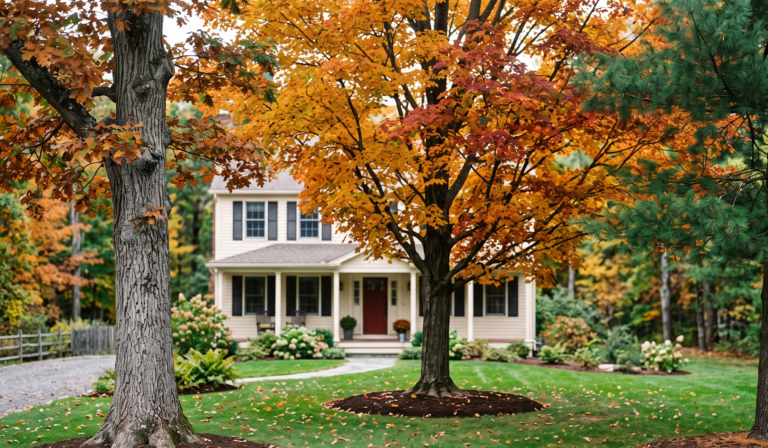
Mature shade trees define the character and curb appeal of neighborhoods across Upstate New York. However, when an aging silver maple, diseased ash, or weathered oak begins to decline, it quickly changes from an asset into a direct safety liability. Severe winter storms, lake-effect freeze-thaw cycles, and summer windstorms across Monroe County can turn structurally compromised timber into an immediate emergency. Recognizing the physical indicators that a tree is dead or dying allows homeowners to act before weak branches collapse onto roofs, vehicles, or overhead utility lines.
Knowing when to schedule professional tree removal protects your landscape and prevents sudden structural damage. The guide below outlines the definitive physical symptoms of tree decline, step-by-step field tests you can perform in your yard, regional hazards unique to the Lake Ontario shoreline, and when to bring in an experienced local arborist.
1. Physical Symptoms: How to Tell if a Tree Is Dying
Trees rarely collapse without prior warning signs. Decline is typically a progressive process resulting from environmental stress, vascular fungal pathogens, structural trauma, or root disruption.
Dead, Brittle, or Hanging Canopy Limbs (Widowmakers)
Canopy dieback is one of the clearest early indicators of vascular failure. While deciduous varieties drop leaves in autumn, dying branches remain completely barren throughout spring and summer.
- Brittle Wood: Dead twigs snap cleanly under minimal pressure rather than bending.
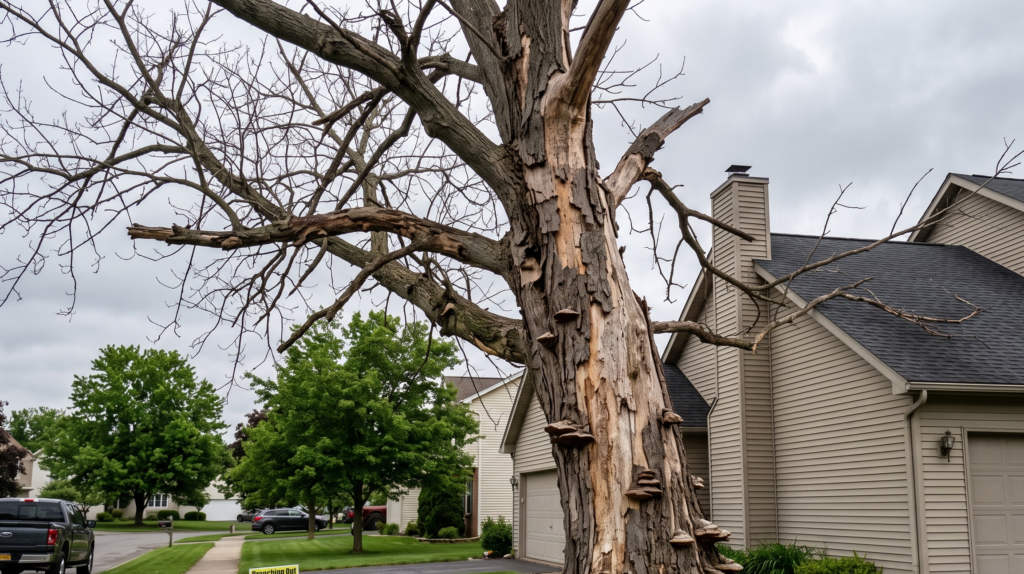
- Detached Limbs: Large broken branches lodged high in the upper canopy—often referred to in the industry as widowmakers—present an immediate hazard, as they can fall without wind.
- Uneven Folia Distribution: Growth restricted strictly to lower, interior branches indicates the upper canopy is no longer receiving adequate sap flow.
Trunk Cavities, Peeling Bark, and Deep Structural Seams
Bark acts as a protective shield for a tree’s active cambium layer. When bark begins shedding in large sheets without regenerating, internal vascular tissue has died.
- Cracks and Fissures: Long vertical splits running through opposite sides of the trunk indicate that the trunk is shearing under structural load.
- Hollow Centers: Cavities caused by progressive fungal decay weaken load-bearing wood. If the outer shell of sound wood is less than one-third of the trunk’s total diameter, the tree is at critical risk of failure.
Fungal Fruiting Bodies and Conks at the Base
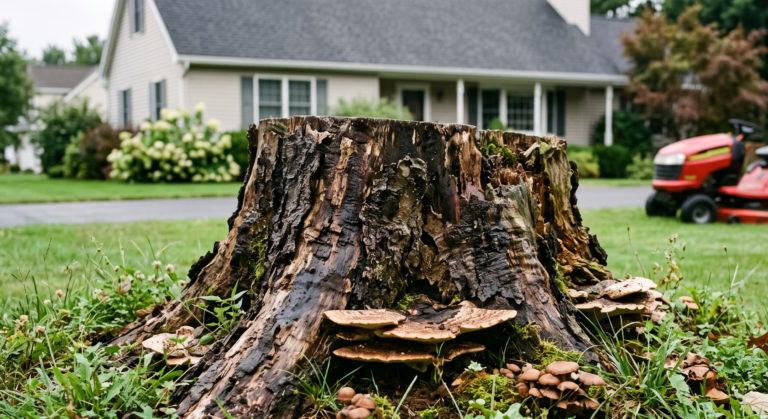
The emergence of shelf fungi, bracket conks, or dense mushroom clusters around the base or root flare points to advanced internal heartwood rot.
- Internal Digestion: Fungi feed directly on the cellulose and lignin that give timber its mechanical strength.
- Irreversible Decay: Once fruiting bodies emerge on outer bark, internal wood decay is usually extensive and cannot be reversed by topical treatments.
Sudden Leaning and Heaving Root Plates
A tree that naturally grows toward an open light gap develops strong anchor roots to counter the lean. In contrast, a tree that suddenly tilts following heavy saturation or a storm is failing at the root plate.
- Mounded Turf: Freshly cracked, lifted soil or exposed fine root hairs on the side opposite the lean confirm that the root plate is lifting out of the earth.
- Severed Anchor Roots: Recent grading, plumbing excavations, or driveway paving that cut into structural root zones can destabilize an otherwise healthy tree.
Canopy Thinning and Out-of-Season Leaf Loss
During the standard active growing season, healthy trees maintain a full, vibrant crown.
- Premature Browning: Leaves turning brown, shriveling, and clinging to limbs throughout the winter instead of dropping naturally point to rapid vascular shutdown.
- Epicormic Sprouts: Dense clusters of small, frantic suckers growing directly from the lower trunk base signal that the upper crown is dying, prompting a survival stress response.
Frequently Asked Questions
Q: What is the main difference between a natural lean and a hazardous lean?
A: A natural lean develops gradually over decades as the tree seeks light; the trunk usually shows a gentle upward curve, and the ground around the base remains level and undisturbed. A hazardous lean occurs rapidly, leaves the trunk straight at an unnatural angle, and causes visible cracking or mounding in the soil opposite the lean.
Q: Does shelf fungus on a trunk always mean the tree must come down?
A: Yes, in the vast majority of cases. Shelf fungi (conks) are the visible reproductive structures of wood-decay fungi. Their presence on the main trunk or root flare confirms advanced internal rot that compromises the tree’s structural load capacity.
2. Field Diagnostic Tests: Scratch and Snap Evaluations
When winter dormancy makes it difficult to assess leafy foliage, homeowners can use simple manual field checks to determine branch vitality.
- The Cambium Scratch Test: Use a pocket knife or thumbnail to scrape away the thin outer bark layer of a pencil-sized twig.
- Living Tissue: A moist, bright green layer directly beneath the bark indicates that active vascular transport is taking place.
- Dead Tissue: A dry, brittle layer that is brown or dull yellow indicates dead tissue. Perform this test across multiple canopy quadrants to confirm whether dieback is localized or widespread.
- The Flexibility Snap Test: Select small twigs across several lower branches and gently bend them past a 90-degree angle.
- Healthy: The twig bends smoothly, resisting breakage due to hydrated wood fibers.
- Dead: The twig snaps quickly with a dry, sharp pop.
If twigs across multiple major leaders fail both tests, the limb scaffolding has lost vascular function and requires structural mitigation.
Frequently Asked Questions
Q: Can lower branches fail the scratch test while the upper crown remains healthy?
A: Yes. Many dense shade species naturally shed interior and lower limbs that receive insufficient sunlight—a natural process called self-pruning. Always test branches across several heights and compass orientations before concluding the entire tree is lost.
Q: How can I tell if an evergreen pine or spruce is dying?
A: Healthy evergreens maintain flexible, rich green or blue-green needles. If interior needles turn brown and drop, that can be normal seasonal shedding. However, if outer needle tips turn reddish-brown, shed completely, or show heavy sap bleeding (pitch tubes) along the trunk, the tree is under severe stress or infested with bark beetles.
3. Why Prompt Tree Removal Is Critical for Safety and Property
Delaying the removal of an unstable tree significantly increases both property risk and removal costs.
Structural Property Damage and Insurance Complications
Dead wood rapidly loses elasticity and weight-bearing capacity. As rot advances, wind gusts or snow accumulations cause unpredictable structural limb failures. If an unaddressed dead tree damages an adjacent home, driveway, or garage, insurance adjusters may review past maintenance records. Demonstrating proactive tree care prevents liability disputes over foreseeable neglect.
Insect Infestations and Secondary Pathogen Spread
Dying trees attract opportunistic wood-boring pests, including carpenter ants, powderpost beetles, and termites.
- Once colonies establish in decaying heartwood, they readily migrate to adjacent healthy trees, landscape structures, decks, and home foundations.
- Fungal spores from declining trees are carried by wind and splash-back rain to neighboring ornamental plantings.
Safe Dismantling Requires Sound Wood
Tree care professionals use technical rigging systems, friction brakes, and ropes anchored directly to the tree’s main trunk to lower large sections safely.
- When dead trees are left standing for seasons, wood becomes too brittle to support climber lines or dynamic rigging loads safely.
- Removing thoroughly decayed timber often demands large specialized bucket trucks or mobile cranes, which substantially increases operational scope and removal expenses.
Frequently Asked Questions
Q: Will homeowner insurance pay for dead tree removal before it falls?
A: Standard policies generally consider preventative removal routine property maintenance and do not cover it. Insurance coverage typically only applies after a tree falls and causes verified structural damage to an insured dwelling, deck, or outbuilding.
Q: Why does waiting to remove a dead tree make it more expensive?
A: As decay spreads, trees lose structural stability, preventing arborists from climbing them safely or anchoring ropes. Crews must then bring in specialized aerial cranes or bucket lifts or perform complex ground rigging, which requires extra labor, machinery, and time.
4. Local Environmental Factors: Lake Ontario Weather and Soil Conditions
Residential trees across northern Monroe County face specific environmental factors that accelerate structural wear:
- Lake-Effect Ice and Snow Accumulation: Proximity to Lake Ontario brings severe winter precipitation. Heavy, wet snow and freezing ice stick directly to dormant limbs. Dead branches lack flexible sap flow and fracture under this added weight.
- Lakefront Wind Stress: Strong northwest wind patterns off the open water put high torsional strain on tree canopies. Trees with internal root rot or trunk decay struggle to resist sustained gale-force winds.
- Saturated Clay Soils and Spring Thaw: Much of the soil in Hamlin, Hilton, and Greece features high clay density, retaining standing water well into late spring. Prolonged root submersion deprives roots of oxygen, encouraging root pathogens like Phytophthora and Armillaria (honey fungus).
Inspecting mature trees after severe winter storms and during the initial spring ground thaw helps identify root-plate movement before seasonal storms hit.
Frequently Asked Questions
Q: What tree species are in highest decline across Monroe County?
A: Green and white ash trees have experienced widespread decline due to the Emerald Ash Borer (EAB). Unmanaged mature silver maples and willows also experience elevated limb failure due to their brittle wood grain and vulnerability to heavy ice storms.
Q: How does lakefront wind affect a structurally compromised tree?
A: High winds create dynamic loads that twist the entire trunk. When decay has hollowed out the interior heartwood, the trunk cannot absorb torsional movement, which can cause sudden splitting along vertical seams.
5. Can a Dying Tree Be Saved? When to Prune vs. When to Remove
Not every stressed tree requires complete takedown. In early stages of decline, focused arborist intervention can sometimes restore structural balance:
- Targeted Crown Pruning: Removing dead, broken, or diseased branches eliminates entry points for secondary decay while reducing canopy wind drag.
- Deep-Root Soil Decompaction: Aerating compacted clay soil and applying slow-release nutrients can help trees recover from root damage caused by construction or poor drainage.
- Targeted Pest Injections: Systemic injections can suppress certain pest infestations if administered before trunk girdling surpasses critical thresholds.
The 50% Rule for Structural Integrity
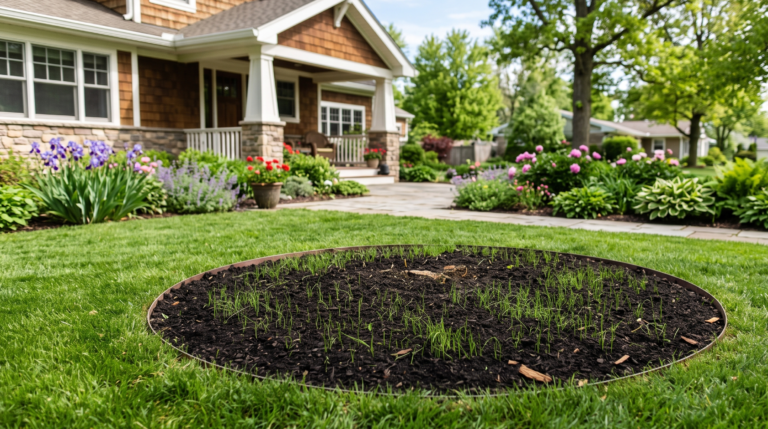
If more than 50% of the upper canopy is dead, or if bark is missing around more than half of the main trunk’s circumference, the tree can rarely recover enough photosynthetic energy to survive. In these cases, complete removal and stump grinding is the practical, safe solution.
Frequently Asked Questions
Q: Can tree wound dressings or paint stop trunk rot?
A: No. Research shows that wound paints and sealants trap internal moisture against the wood, creating an ideal microclimate for decay fungi. Trees naturally compartmentalize decay using their own internal defense systems (CODIT); artificial sealants hinder this natural process.
Q: Can filling a trunk cavity with foam or concrete stabilize it?
A: No. Filling hollow trees with concrete is an outdated method that adds heavy, inflexible weight. Under strong wind loads, the rigid concrete acts as a wedge against shifting wood, often causing the tree to crack and fail at the cavity line.
Finding Reliable Tree Removal Near You (Hilton & Monroe County)
When a storm rolls through or an old tree begins splitting at the crotch, you need a local, fully insured crew with heavy equipment ready to respond. Whether you are dealing with an ash tree killed by borers, a compromised maple leaning toward your roof, or heavy limbs blocking your driveway, choosing a locally based specialist ensures rapid response times and equipment suited to local terrain.
Branching Out Tree operates out of Hilton, NY, providing clear tree evaluations, precise crane and bucket work, and complete site cleanup across our surrounding towns:
- Primary Service Hub: Hilton, NY (14468)
- Surrounding Service Areas: Greece, Parma, Hamlin, Clarkson, Spencerport, and Brockport.
Our crew uses modern rigging gear, specialized machinery, and proven safety techniques to take down compromised trees with minimal impact on your lawn, driveway, and landscaping.
- Company: Branching Out Tree Service
- Address: 259 Walker Rd, Hilton, NY 14468
- Phone: +1 585-667-8733
- Website: https://branchingouttreehiltonny.com/
Frequently Asked Questions
Q: How close to a home can a dead tree be before it is an emergency?
A: Any dead or dying tree tall enough that its fall radius reaches an exterior wall, roofline, deck, or electrical drop should be treated as an urgent concern. Wind speeds can carry failing limbs well past the tree’s outer branch line.
Q: What should I prepare before an arborist visits for an evaluation?
A: Ensure clear access to your yard, keep pets indoors, note roughly when symptoms first appeared (such as unseasonal leaf shedding or new fungal growths), and identify any underground installations like sprinkler heads, buried power lines, or septic drain fields.